
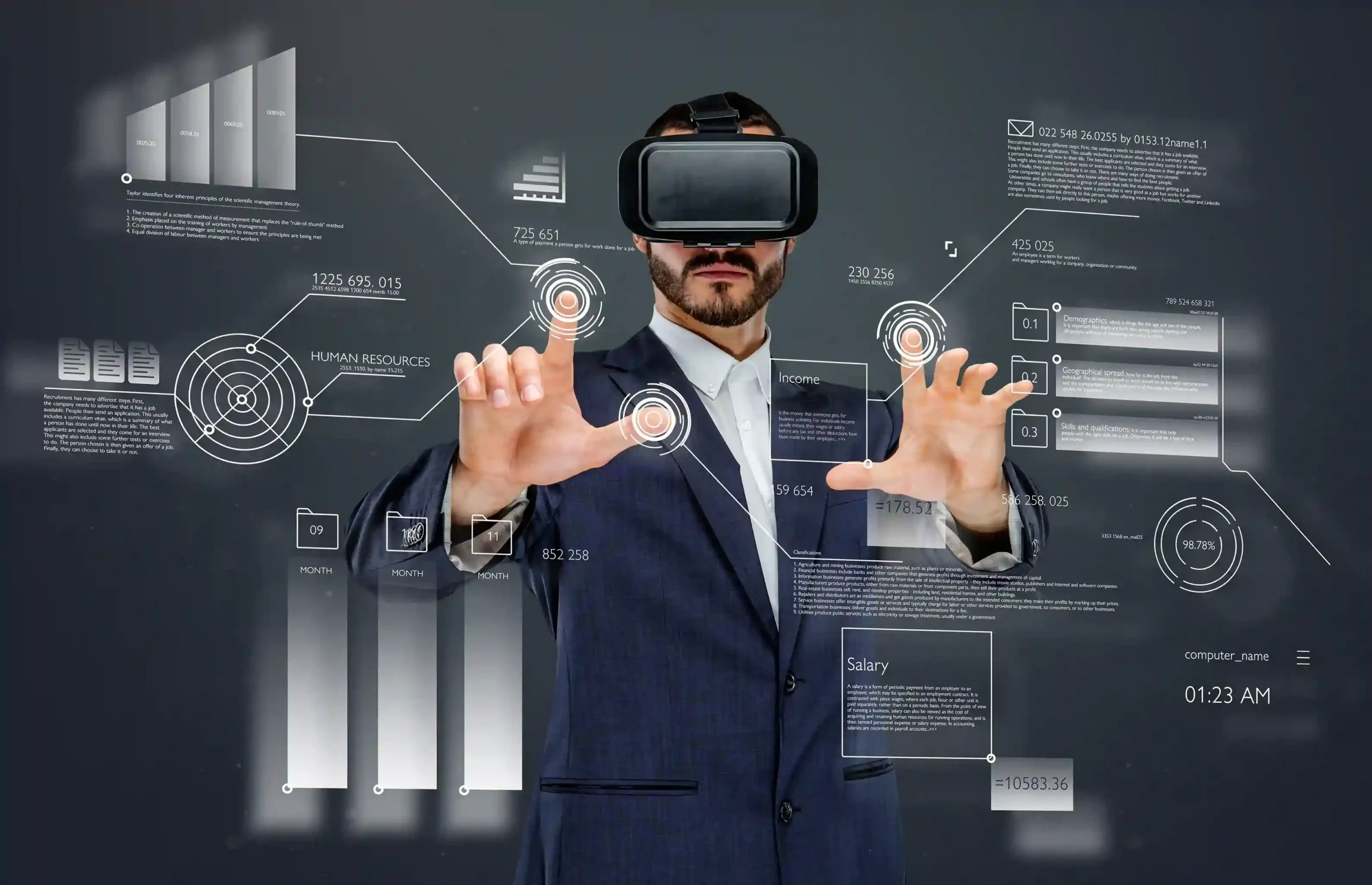
How AI is Transforming Modern Businesses in 2026
Artificial Intelligence (AI) is no longer a futuristic concept—it has become a core driver of innovation, efficiency, and growth for modern businesses. In 2026, organizations across industries are integrating AI into their operations to automate processes, improve decision-making, enhance customer experiences, and build competitive advantages.
From startups to global enterprises, AI technologies such as machine learning, predictive analytics, computer vision, and autonomous AI agents are reshaping how companies operate and compete in the digital economy.
This article explores the key ways AI is transforming modern businesses in 2026 and why organizations must adopt AI-driven strategies to stay competitive.
1. Intelligent Automation of Business Processes
One of the most significant impacts of AI is intelligent automation. Traditional automation relied on rule-based systems, but AI-powered automation can learn from data and make decisions.
AI systems now automate tasks such as:
• Data entry and document processing
• Customer support interactions
• Invoice management and financial reporting
• Workflow management and scheduling
These systems allow employees to focus on creative, strategic, and high-value tasks instead of repetitive work. AI automation can significantly improve productivity and operational efficiency across departments.
Businesses adopting AI automation often see faster processes, reduced errors, and lower operational costs.
2. AI-Powered Decision Intelligence
Modern businesses generate massive amounts of data. AI enables organizations to transform raw data into actionable insights.
AI-powered analytics systems can:
• Analyze large datasets in real time
• Predict customer behavior and market trends
• Identify risks and opportunities
• Support strategic decision-making
Research shows that over half of organizations using AI report improved decision-making and better business insights.
With predictive analytics, companies can anticipate demand, optimize pricing strategies, and improve supply chain planning.
3. Rise of Autonomous AI Agents
One of the most important trends in 2026 is Agentic AI.
Unlike traditional AI systems that only respond to commands, AI agents can independently perform complex tasks and manage workflows. These agents act as virtual teammates that continuously monitor business processes and execute actions when needed.
Examples include:
• AI agents managing customer support tickets
• Autonomous marketing campaign optimization
• AI-powered project management assistants
• Automated software development tools
These systems are enabling 24/7 operations with minimal human intervention, dramatically improving productivity.
4. Hyper-Personalized Customer Experiences
Customer expectations have evolved significantly. AI enables businesses to deliver highly personalized experiences at scale.
AI analyzes customer data such as:
• Purchase history
• Online behavior
• Preferences and engagement patterns
This allows businesses to provide:
• Personalized product recommendations
• Targeted marketing campaigns
• AI-powered chatbots and assistants
• Dynamic pricing strategies
AI-driven chatbots can now handle up to 70–80% of initial customer inquiries, improving response times and reducing support costs.
As a result, companies can enhance customer satisfaction and build stronger relationships.
5. AI-Driven Innovation and Product Development
AI is also transforming how companies design and develop new products.
Generative AI tools help businesses:
• Generate product concepts
• Create marketing content
• Design UI/UX prototypes
• Write software code
• Develop documentation
These tools accelerate development cycles and reduce time-to-market. Companies can rapidly prototype ideas and launch innovative products faster than ever before.
This capability is especially valuable for startups and technology companies seeking rapid growth.
6. AI in Cybersecurity and Risk Management
As digital systems become more complex, cybersecurity threats are increasing. AI is playing a critical role in detecting and preventing cyber threats.
AI-based cybersecurity systems can:
• Detect suspicious activity in real time
• Identify fraud patterns in financial transactions
• Monitor network anomalies
• Predict potential cyberattacks
Unlike traditional security tools that respond after an attack, AI systems can identify threats proactively and prevent damage.
This makes AI an essential component of modern enterprise security strategies.
7. AI-Powered Enterprise Infrastructure
Businesses are increasingly moving toward unified AI infrastructure, integrating data, machine learning models, and deployment platforms.
A unified AI ecosystem enables companies to:
• Deploy AI solutions faster
• Manage models securely
• Scale AI across the organization
• Reduce operational costs
Organizations with centralized AI infrastructure can deploy models up to three times faster and achieve significant cost savings.
This shift is transforming AI from isolated experiments into enterprise-wide intelligence systems.
8. Competitive Advantage Through AI
AI adoption is rapidly becoming a strategic differentiator.
Businesses using AI effectively can:
• Launch products faster
• Make smarter decisions
• Deliver superior customer experiences
• Optimize operations
The global AI market is expected to grow rapidly, reaching trillions of dollars in value over the coming decade, reflecting its massive impact on global business innovation.
Companies that delay AI adoption risk falling behind competitors who are leveraging AI-driven insights and automation.
The Future of AI-Driven Businesses
Looking ahead, AI will continue evolving from simple tools into intelligent digital partners for organizations.
Key future trends include:
• Autonomous AI ecosystems
• AI-native software development
• Real-time decision intelligence
• Human-AI collaborative workplaces
• Self-optimizing business operations
Businesses that invest in AI today will be better positioned to innovate, scale, and lead in the digital economy.
Conclusion
Artificial Intelligence is fundamentally transforming modern businesses in 2026. From automation and predictive analytics to autonomous AI agents and personalized customer experiences, AI is redefining how organizations operate and compete.
For forward-thinking companies, AI is no longer optional—it is a strategic necessity for growth, efficiency, and innovation.
Organizations that embrace AI today will shape the next generation of digital enterprises.